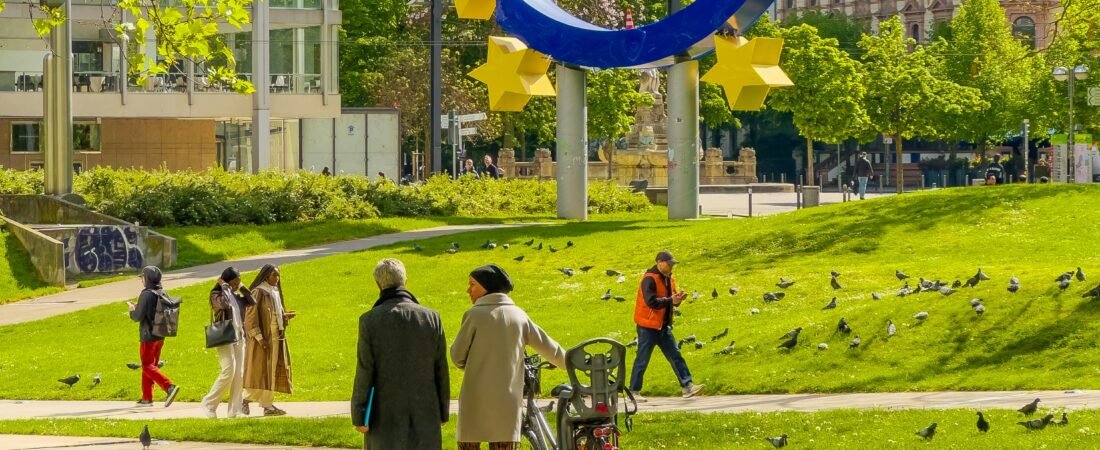
In April 2026, Germany’s approach to immigration and cultural diversity is undergoing its most profound transformation since the 1960s. The nation has shifted from a reactive stance on migration to a proactive “Land of Opportunity” strategy, driven by an urgent need for workers and a desire to modernize the definition of what it means to be “German.”
Here is the state of immigration and diversity in Germany today.
🏛️ 1. The “Modern Citizenship” Revolution
The landmark 2024 Citizenship Reform has fully matured by 2026, fundamentally altering Germany’s social fabric.
- Dual Citizenship for All: For the first time in modern history, Germany allows dual citizenship for non-EU citizens as a standard rule. This has led to a surge in naturalizations among the Turkish-German community (the “Gastarbeiter” generation and their descendants), who can finally hold both passports.
- Accelerated Naturalization: The residency requirement for citizenship has been cut from eight years to five years (and just three years for those showing exceptional integration).
- The “Generation” Shift: In 2026, roughly 27% of the German population (over 22 million people) have a “migration background,” meaning they or at least one parent were born without German citizenship.
🛂 2. The “Chancenkarte” (Opportunity Card) and Skilled Labor
With a deficit of roughly 400,000 workers per year, Germany has pivoted to a points-based immigration system inspired by Canada.
- The Points System: The Chancenkarte, fully operational in 2026, allows skilled workers from outside the EU to enter Germany for up to a year to look for work based on a points system (language skills, professional experience, age, and ties to Germany).
- Western Balkan Regulation: The government has made the “Western Balkan Regulation” permanent, allowing up to 50,000 workers annually from the region to enter the German labor market, regardless of formal professional qualifications.
📊 Germany’s Diversity Matrix: 2026
| Metric | Status | Impact on Society |
| Labor Shortage | 1.8 million vacancies | Driving more liberal visa routes for tech and care work. |
| Naturalization Rate | +25% increase | Growing political influence of minority voters. |
| Cultural Language | Rise of “Kiezdeutsch” | Evolution of the German language in urban centers. |
| Religious Diversity | 6.7% Muslim population | Increased focus on state-recognized Islamic education. |
🌿 3. Integration vs. “Participation”
In 2026, the German government has replaced the word “Integration” with “Teilhabe” (Participation). The focus is no longer on migrants “fitting in” but on the state removing barriers to their active contribution.
- Language Training: Germany has invested billions into Integration Courses, making B1-level German a baseline for participation. However, there is a 2026 push to allow “English-first” tracks in high-tech sectors to remain competitive.
- The “Diversity Audit”: Large German firms (DAX companies) are increasingly adopting diversity quotas for management boards, recognizing that a diverse workforce is a prerequisite for global market success.
🏙️ 4. Social Challenges: The “Two Germanys”
Despite the legal progress, 2026 remains a year of tension regarding cultural identity.
- The East-West Divide: Integration remains a polarized topic, particularly in eastern states (like Saxony and Thuringia), where the AfD (Alternative for Germany) maintains significant support by campaigning against “over-foreignization” (Überfremdung).
- Antisemitism and Islamophobia: Following geopolitical tensions in 2024 and 2025, Germany is currently navigating a sensitive debate on how to protect its Jewish community while ensuring its 5.5 million Muslims feel like equal citizens.
💡 5. The “New German” Identity
The 2026 debate is no longer about whether Germany is an immigration country, but how it should look.
- “Heimat” Reimagined: The concept of Heimat (homeland) is being expanded to include non-ethnic Germans. From the “Döner Kebab” becoming the unofficial national dish to the diverse makeup of the national football team, the cultural definition of “Germanness” is becoming more civic and less ethnic.